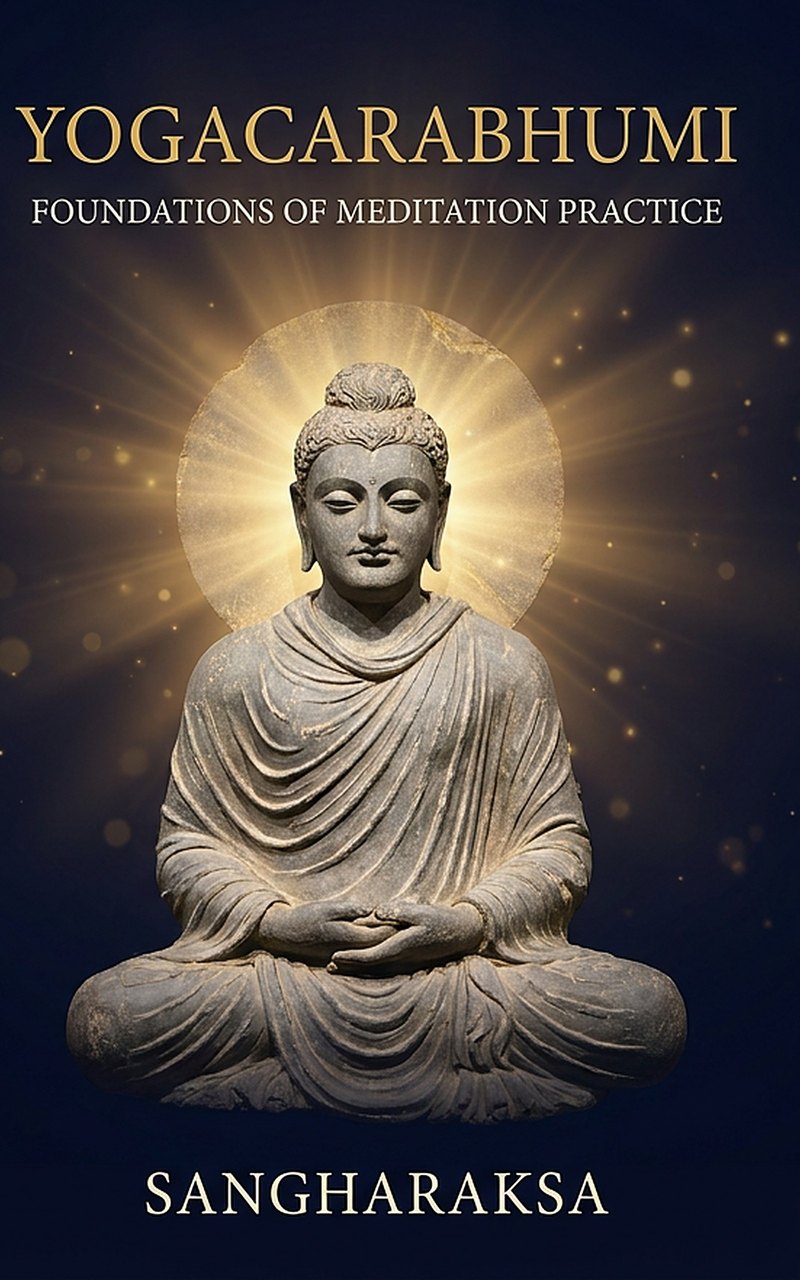
The Meditation Manuals
Foundations of Meditation Practice
Saṅgharakṣa's Yogācārabhūmi — the meditation manual of China's first meditators
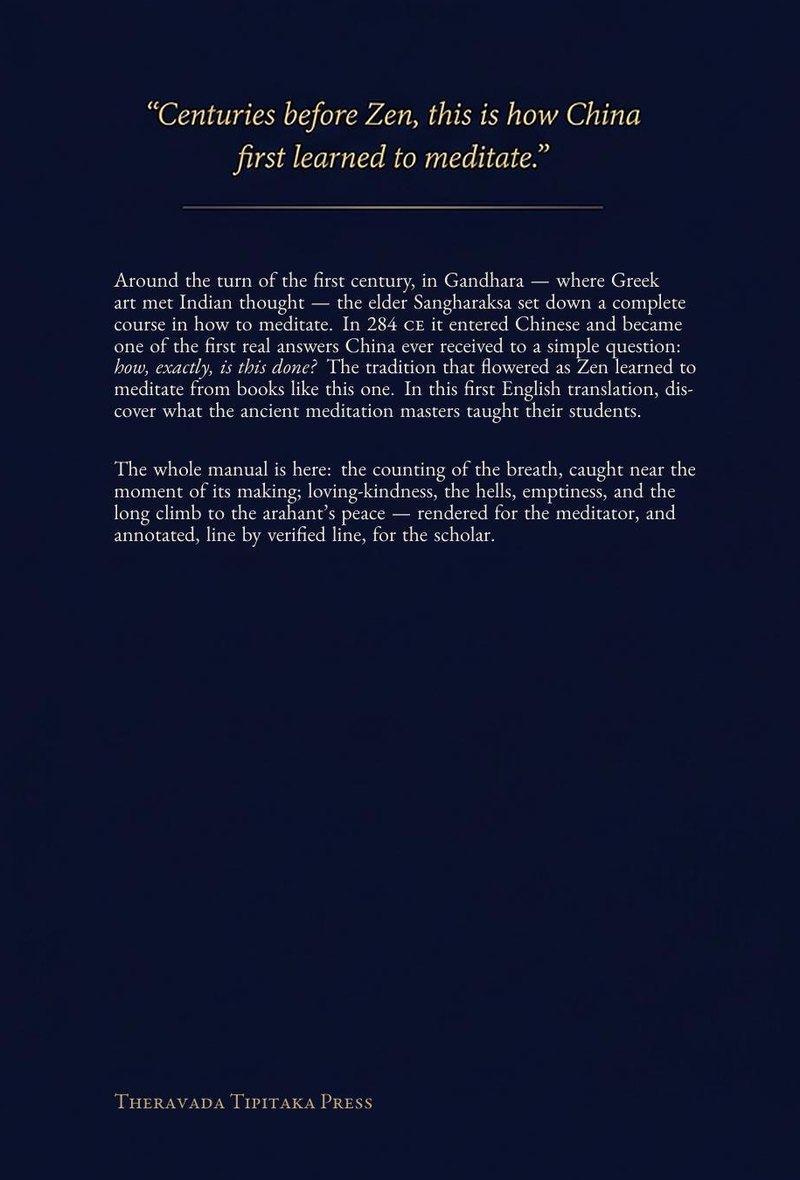
Centuries before Chan or Zen, this is how China first learned to meditate — and it had never before been translated into English.
Around the turn of the first and second centuries, in Gandhāra — the Buddhist northwest, where Greek art met Indian thought — an elder named Saṅgharakṣa, a near-contemporary of the poet Aśvaghoṣa, set down a complete, step-by-step course in how to meditate. Its Sanskrit title was the Yogācārabhūmi, “the stages of one who practises yoga.” In 284 CE the great translator Dharmarakṣa carried it into Chinese, and it became one of the very first practical answers China ever received to a simple question: how, exactly, is this done?
The tradition later flowering as Zen learned to sit from books like this one. Yet in seventeen centuries it was never put into English — until now.
The English is meant to teach a living practitioner, sentence by living sentence — never a cryptic crib. But nothing has been smoothed over or invented: wherever the rendering goes beyond the letter, or leans on a parallel elsewhere in the canon, an endnote gives the literal wording, names the parallel and its exact location, and shows the reasoning. Some ninety canonical cross-references — in Pāli, Sanskrit, and Chinese — stand behind the notes, every one verified in its source.
Inside this edition
- The counting of the breath — caught here near the moment of its making; the endnotes show it appears nowhere in the early canon of either tradition
- Loving-kindness, the guarding of the senses, the contemplation of death, and the sorting of meditators by temperament — the earliest such system known
- The great chapter on emptiness and non-self, carried by the canon's most famous images: the mirage, the plantain with no core, the foam on the river
- An unflinching tour of the hells, answered at once by a chapter of pure encouragement
- The whole ascent to the arahant and the peace of a lamp gone out, with a later Mahāyāna coda built on two of the Lotus Sūtra's parables
From the book